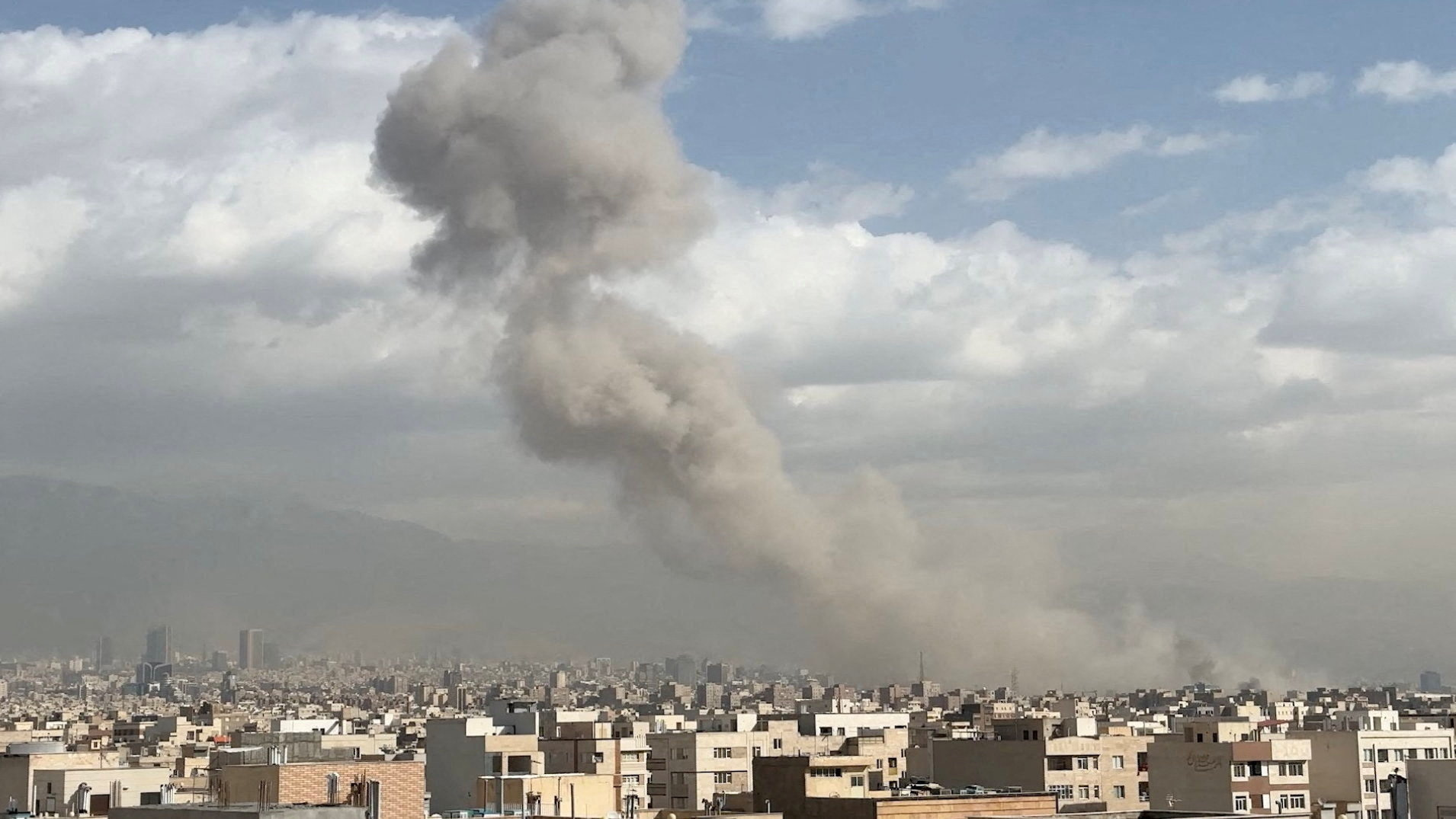
Israel's Military Superiority: Overwhelming Iran's Air Defenses
The geopolitical landscape of the Middle East has long been characterized by intricate alliances, simmering rivalries, and moments of overt conflict. At the heart of much regional instability lies the enduring tension between Israel and Iran. While both nations possess significant military capabilities, recent history, particularly the events of June 2025, has highlighted a stark reality: Israel's formidable military superiority, especially concerning its ability to neutralize Iran's air defenses with overwhelming precision and effectiveness. This demonstrated capability has reshaped strategic calculations and underscored the delicate balance of power in the ongoing Iran-Israel-US Conflict: Understanding Key Military Dynamics.
The Evolving Dynamics of the Israel-Iran Conflit
For decades, the conflit iran with Israel has been primarily a shadow war, fought through proxies, cyberattacks, and clandestine operations. However, the mid-2020s witnessed a concerning escalation, culminating in direct military engagements. Prior to these confrontations, military analysts often debated the potential outcomes of a direct clash, acknowledging both nations possessed considerable might. Iran's arsenal includes a vast array of ballistic and cruise missiles, a significant drone program, and air defense systems primarily sourced from Russia and China. Israel, conversely, boasts a cutting-edge air force, sophisticated intelligence capabilities, and a highly trained military, frequently updated with advanced American technology. The June 2025 conflict served as the first major test of these capabilities in a direct, large-scale engagement, offering critical insights into the real-world operational effectiveness of each side.
The lessons learned from this period are crucial for understanding the future trajectory of the region. While Iran's capacity for asymmetric warfare and its extensive missile capabilities remain a concern, the direct engagement revealed vulnerabilities in its conventional defense infrastructure, particularly its air defense network. This shift from proxy warfare to direct confrontation fundamentally alters the strategic calculus for all regional actors and their global allies.
Unpacking Israel's Air Superiority Doctrine and Capabilities
Israel's demonstrated ability to overwhelm Iranian air defenses is not a sudden development but the result of decades of strategic investment, rigorous training, and the integration of advanced technologies. At the core of Israel's air superiority doctrine is a multi-layered approach designed for precision, speed, and efficiency. Key components contributing to this overwhelming advantage include:
- Advanced Aircraft Fleet: The Israeli Air Force (IAF) operates some of the world's most sophisticated fighter jets, including stealth F-35s and highly upgraded F-16s and F-15s. These aircraft are equipped with advanced avionics, electronic warfare suites, and long-range precision-guided munitions capable of operating effectively in contested airspace.
- Superior Intelligence, Surveillance, and Reconnaissance (ISR): Israel's robust intelligence apparatus provides unparalleled situational awareness. This includes satellite imagery, drone surveillance, signal intelligence, and human intelligence, allowing for detailed mapping of enemy air defense networks, identification of critical vulnerabilities, and real-time targeting updates.
- Electronic Warfare (EW) Capabilities: A crucial element of air superiority is the ability to jam, spoof, and disrupt enemy radar and communication systems. Israel possesses highly advanced EW capabilities that can blind air defense batteries, confuse operators, and open corridors for penetrating strike aircraft.
- Suppression of Enemy Air Defenses (SEAD) Doctrine: The IAF has a well-honed doctrine for SEAD operations, involving a coordinated effort to destroy or neutralize enemy surface-to-air missile (SAM) sites and anti-aircraft artillery. This includes employing specialized munitions like anti-radiation missiles (ARMs) and employing sophisticated tactics to trick and bypass enemy defenses.
- Pilot Training and Experience: Israeli pilots undergo exceptionally rigorous and realistic training, including simulated combat against advanced air defense systems. Their extensive operational experience from repeated engagements in complex environments further sharpens their skills and decision-making under pressure.
These combined elements allow Israel to execute highly complex air operations with remarkable effectiveness, turning theoretical military advantages into practical dominance in the skies. This capability is paramount in any potential conflit iran scenario, determining the ability to project power and protect national assets.
The June 2025 Precedent: Overwhelming Iran's Air Defenses
The military engagements of June 2025 represented a watershed moment in the Israel-Iran dynamic. While specific details remain under tight security wraps, reports from the time, including those from reliable sources like Encyclopedia Britannica, highlighted Israel’s ability to "overwhelm Iran’s air defenses and sabotage its military assets with apparent ease." This wasn't merely a limited strike but a demonstration of comprehensive aerial dominance, suggesting a significant disparity in operational capabilities.
What does "overwhelming" mean in this context? It implies several critical factors:
- Penetration of Layered Defenses: Iran employs a multi-layered air defense system, comprising short, medium, and long-range SAMs. For Israel to overwhelm these defenses means successfully penetrating multiple layers, neutralizing radar systems, command and control centers, and launch platforms.
- Precision Sabotage: The term "sabotage its military assets" indicates that Israeli strikes were not just destructive but surgically precise, likely targeting critical infrastructure, command nodes, weapons depots, and possibly even research facilities deemed vital to Iran's military capabilities. This points to highly sophisticated targeting systems and excellent intelligence.
- "Apparent Ease": This phrase is perhaps the most telling. It suggests that the Israeli operations encountered less resistance than anticipated or were executed with such high efficiency that Iranian defenses proved largely ineffective. This could be due to a combination of superior technology, overwhelming numbers, or a failure in Iranian C2 (Command and Control) systems under pressure.
The implications of this demonstrated capability are profound. It sends a clear message about Israel's readiness and capacity to project power deep into Iranian territory, underscoring the severe risks Iran faces if it escalates conventional military hostilities. This precedent will undoubtedly shape future strategic planning in both capitals and among international observers of the conflit iran.
The Strategic Role of the US Alliance in the Conflit Iran
The US-Israel alliance played a crucial, if not always overt, role in the swift and decisive nature of Israel's actions in June 2025. This long-standing strategic partnership extends far beyond military hardware sales, encompassing deep intelligence sharing, joint military exercises, and a robust diplomatic framework. For Israel, the alliance with the United States provides a crucial strategic depth and a technological edge that would be difficult to maintain otherwise. Learn more about how this dynamic impacts the region by reading US-Israel Alliance & Iran: Risks of Prolonged Regional Conflict.
Key contributions of the US alliance include:
- Advanced Military Technology: The US consistently supplies Israel with state-of-the-art military technology, often ahead of other allies, ensuring Israel maintains its qualitative military edge (QME). This includes stealth aircraft, precision munitions, and sophisticated electronic warfare systems.
- Intelligence Sharing: A seamless flow of intelligence between the US and Israel provides both nations with a comprehensive understanding of regional threats, including Iran's military developments and dispositions. This intelligence is vital for planning and executing effective operations.
- Joint Exercises and Training: Regular joint military exercises enhance interoperability and allow both forces to test and refine tactics against simulated threats. This collaboration improves Israel's operational readiness and strategic planning.
- Diplomatic and Economic Support: Beyond direct military aid, US diplomatic and economic support is invaluable, providing Israel with the political and financial stability necessary to invest heavily in its defense infrastructure.
- Deterrence Factor: The very existence of the US-Israel alliance acts as a significant deterrent, complicating any adversary's calculus. The potential for US intervention or support in a prolonged regional conflict adds a layer of complexity for Iran.
This alliance is not merely about military aid; it's a comprehensive strategic partnership that reinforces Israel's military capabilities and significantly influences the broader dynamics of the conflit iran, potentially mitigating the risks of prolonged regional conflict for Israel.
Future Implications and Geopolitical Realities
The demonstrated Israeli military superiority against Iran's air defenses in June 2025 carries profound implications for the future of the region. For Iran, it highlights an urgent need to modernize and harden its conventional air defense capabilities, a task that will be costly and challenging given the sophisticated nature of Israeli and US technology. Iran may increasingly rely on asymmetric tactics, proxy forces, and its ballistic missile program to offset this conventional disadvantage.
For Israel, the successful operations reinforce its deterrent posture but also potentially embolden further action against perceived threats. The international community, including major powers like the United States, will be closely watching for signs of escalation, understanding that a prolonged or widespread conflit iran could destabilize global energy markets and foster broader regional strife. Policymakers must carefully consider the balance between deterrence and de-escalation, recognizing the inherent risks in such a volatile environment.
Practical Tip: Analysts studying the conflit iran should focus not just on declared military arsenals but on demonstrated operational effectiveness, command and control resilience, and the impact of electronic warfare, which often proves decisive in modern air combat scenarios.
In conclusion, the events of June 2025 unequivocally showcased Israel's significant military advantage, particularly its ability to effectively neutralize and overwhelm Iran's air defense systems. This superiority, bolstered by decades of strategic investment, technological advancement, and a robust alliance with the United States, has set a new precedent in the enduring conflit iran. While Iran continues to pose various threats, the demonstrated ease with which its critical military assets were sabotaged points to a considerable challenge for Tehran in any direct conventional engagement. The geopolitical ramifications of this proven capability will continue to shape the regional power dynamics for years to come, influencing both defensive strategies and the potential for future escalation.